 |
||||
LINK GABAB receptors are broadly expressed in the nervous system and have been implicated in a wide variety of neurological and psychiatric disorders. The cloning of the first GABAB receptor cDNAs in 1997 revived interest in these receptors and their potential as therapeutic targets. With the availability of molecular tools, rapid progress was made in our understanding of the GABAB system. This led to the surprising discovery that GABAB receptors need to assemble from distinct subunits to function and provided exciting new insights into the structure of G protein-coupled receptors (GPCRs) in general. |
LINK In the 40 years since the first benzodiazepine was brought into clinical use there has been a substantial growth in understanding the molecular basis of action of these drugs and the role of their receptors in disease states.....Current insights into the role of the GABAA—benzodiazepine receptor in the action of benzodiazepines and as a factor in disease states, in both animals and humans, may lead to new, more sophisticated interventions at this receptor complex and potentially significant therapeutic gains. |
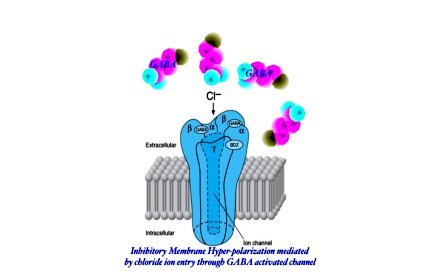
LINK γ-Aminobutyric acid type A (GABAA) receptors, the major inhibitory neurotransmitter receptors responsible for fast inhibition in the basal ganglia, belong to the superfamily of “cys-cys loop” ligand-gated ion channels. GABAA receptors form as pentameric assemblies of subunits, with a central Cl− permeable pore. On binding of two GABA molecules to the extracellular receptor domain, a conformational change is induced in the oligomer and Cl−, in most adult neurons, moves into the cell leading to an inhibitory hyperpolarization. Nineteen mammalian subunit genes have been identified, each showing distinct regional and cell-type-specific expression. |
||
